
A Strategy-Based Approach to Building Fluency in Math
Building students’ number sense is an important part of our role as math teachers. But for many of us, we learned math in a very procedural way when we were students. We memorized the steps to algorithms and learned tricks to help us remember our math facts. There wasn’t ever really a discussion about why the math worked. As long as we could follow the steps and get a correct answer, we were good to go.
But times have changed. We now know more about how students best learn math. Even more important, the math skills that students need to develop to be successful in life have changed. Students will, in fact, have a calculator (smartphone) in their pockets for the rest of their lives, which wasn’t the case when we were students.
Developing students’ number sense and critical thinking skills are more important than ever, but oftentimes the strategies and models that we use to develop these skills are unfamiliar to us (and our students’ families) because very few of us learned math this way. We must take the time to understand the strategies and representations that lead to fluency in math so that we can create learning experiences for our students that build their number sense.
Why a Strategy-Based Approach Builds Fluency
“Why can’t we just teach math the way we always have?” I’m sure you’ve either heard this question from your students’ families, seen memes about this online, or maybe even wondered this yourself. When students are only taught one way to solve a problem (for example, the algorithm), their only option is to use that one way to solve every problem, even when it is inefficient.
For example, consider the problem 100 - 99. A student who only knows the algorithm will stack the numbers, regroup across multiple zeroes, and follow a long series of steps to find the answer of 1. But a student who knows that “Add Up” is one of several subtraction strategies can immediately count up 1 in their head from 99 to 100 to get the answer of 1.
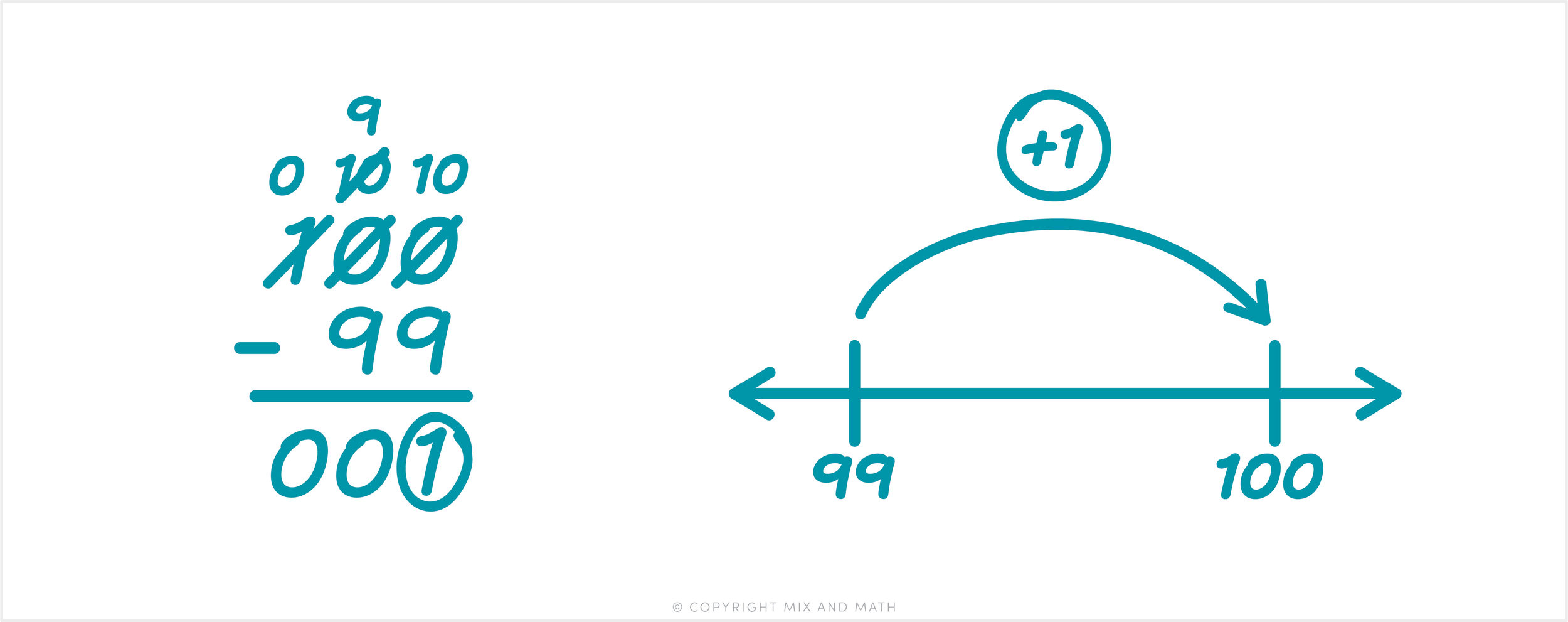
This may appear like an extreme example, but if you’ve been teaching for any length of time, you’ve probably seen something very similar to this in your classroom! Students who do not have a toolbox of fluency strategies use algorithms to solve every single problem. The problem with this isn’t just that it’s inefficient in many cases. The real concern is that the student who uses an algorithm to solve 100 - 99 is bypassing all thinking and reasoning, rather than leaning on what they know about numbers and operations.
A strategy-based approach to building fluency in math equips students with the understanding and skills they need to solve any problem in an accurate, efficient, and flexible way. And it builds confidence in their ability to look at a problem and decide how to solve it based on the strategies they know.
This can only happen when we intentionally teach students the strategies that are available to them.
Students need hands-on and visual learning experiences to understand why a strategy works, and they need opportunities to practice using a strategy with different problems. As they add more and more strategies to their toolbox, they also need practice deciding which strategy to use for which problems.
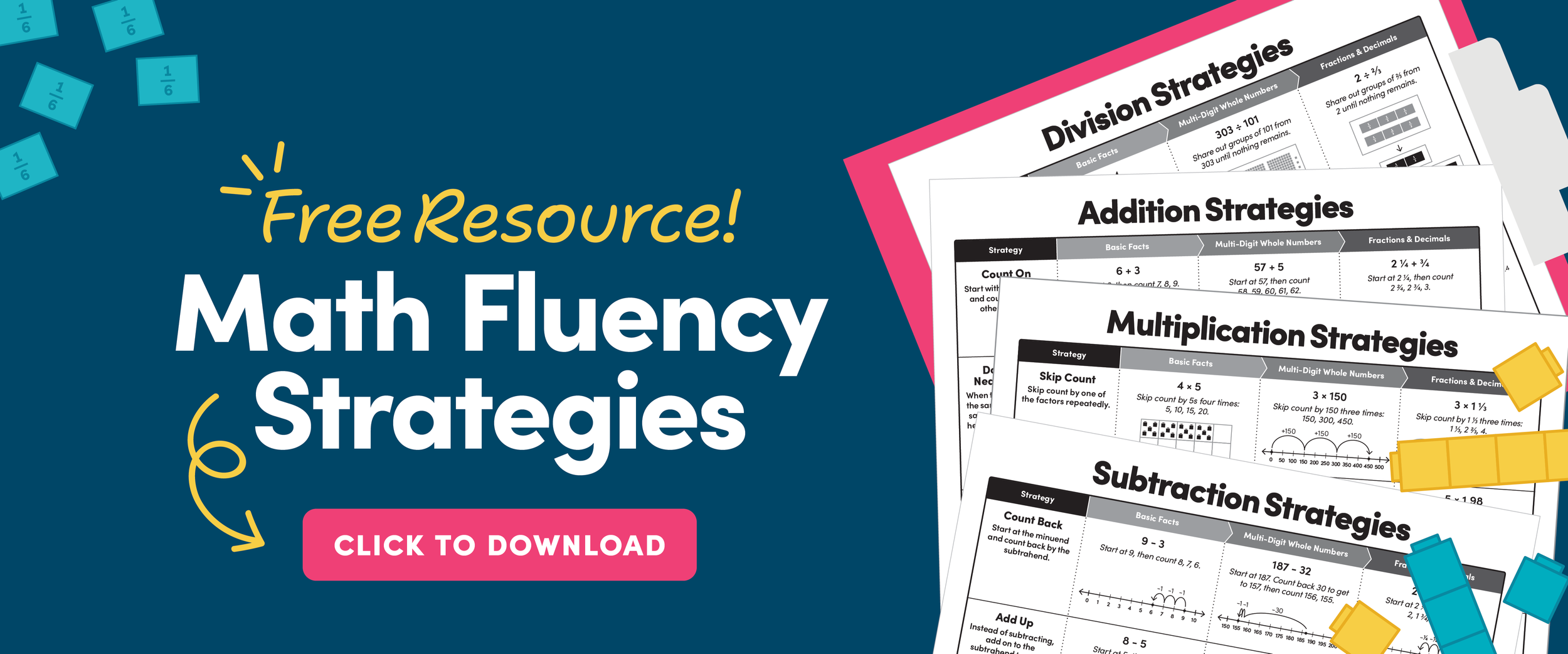
If you’re wondering what strategies you should be teaching students and which visuals best support learning these strategies, we created a free resource to help you! These fluency strategy pages highlight the most useful strategies for all four operations and include representations so that you can see how to make it hands-on and visual as you teach these strategies to students.
Applying These Strategies to ALL Grade Levels
We often think fluency strategies are just for basic facts. But the strategies we use to build students’ number sense with basic facts are the same strategies that contribute to students’ fluency with multi-digit whole numbers, fractions, and decimals. Take a look at how the addition strategy “Make a Friendly Number” can be used in upper elementary…
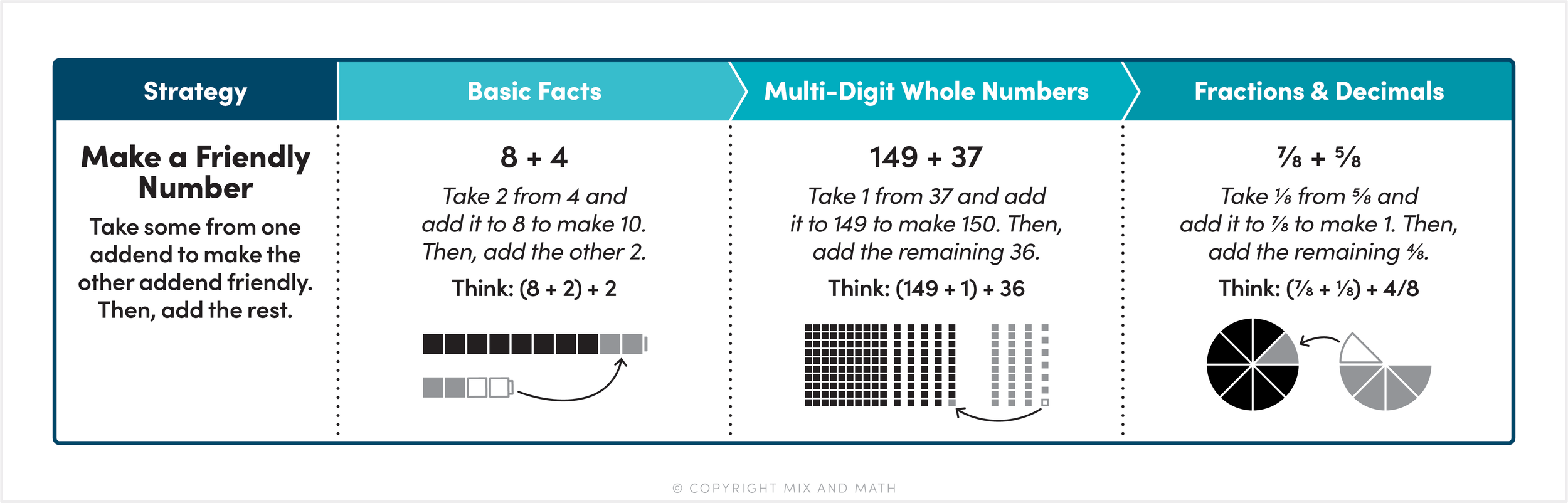
In lower grades, this strategy helps them quickly solve simple problems like 8 + 4 or 7 + 5. Moving the cubes from one addend to the other helps students see why this strategy works. Eventually, students no longer need the physical model (cubes) because they’ve had enough experience to know that they can mentally adjust the addends to find the sum.
Once students internalize this strategy, they can apply it to more complex problems that include numbers in the hundreds or thousands and problems with fractions or decimals. The strategy doesn’t change, but the application of it is expanded over time.
This is the exact reason why only memorizing basic math facts is short-sighted. Students can memorize dozens of math facts, but at some point, they need to build their toolbox of strategies in order to avoid being dependent on using algorithms to solve problems that could easily be solved with number sense.
Something we get asked all the time is, “My students never learned these strategies for basic facts. How can I help them use the strategies for more complex problems?” Here are two easy tips to help students connect these strategies from lower elementary to upper elementary and middle school, regardless of their previous experience (or lack thereof):
Try problem strings. Problem strings are just a series of problems, each related to the one before it. To help students build an understanding of the “Make a Friendly Number” strategy, you might start with 2-3 basic fact problems, like 8 + 4 or 7 + 5. Use these to introduce the strategy so students see how it works. Then, the next few problems in the string might use greater whole numbers, like 149 + 37, so students can see how the strategy expands. Finally, give students a problem like 7/8 + 5/8 so they understand how the same strategy applies to fractions.
Continue using models. When students apply these strategies to multi-digit whole numbers, fractions, and decimals, math manipulatives and visual models continue to be a great support. The base ten blocks and fraction circles in the example above not only remind students why the strategy works, but they also help students see when this strategy might be useful. When one addend in a problem is close to a friendly number, this strategy is a great option.
If you want to see how all of the fluency strategies for each operation can be used with multi-digit whole numbers, fractions, and decimals, be sure to download our FREE Math Fluency Strategy pages. It’s a great resource to see where students are coming from with these strategies and where they are headed so that your school’s math team can align their language and instruction across all grade levels.
Helping Families Support This Work at Home
It’s important to remember that our students’ caregivers likely learned math the way that we learned math as students… Very procedural and lots of memorizing facts and algorithms. So if the strategies and representations we’re using to build students’ fluency once felt unfamiliar to us as educators, they most certainly will feel uncomfortable for our students’ families.
If we want our students’ families to support the work we’re doing in the classroom, we have to provide them with resources so that they understand the strategies themselves and feel like partners in this work to build students’ number sense. As we were creating the Math Fluency Strategy pages for teachers, we decided to create a simplified version that could be sent home to students’ families.
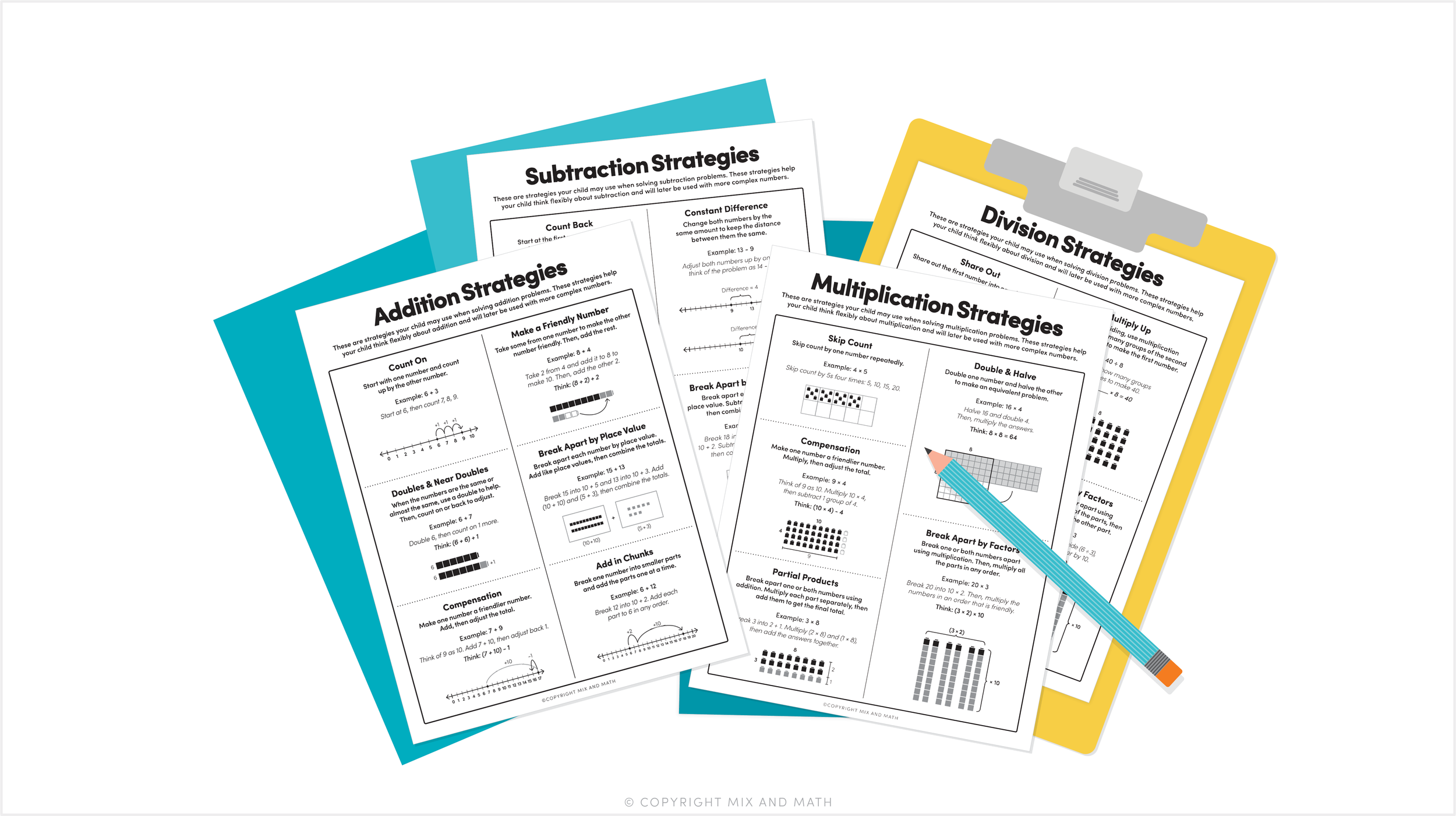
To make these accessible for families, we focused only on the basic math facts. If we want students to apply these strategies to more complex problems, they have to truly “own” these strategies. And practicing these strategies with basic facts is a great way for families to support their child with math at home. We can build on this work at home by challenging students to apply these strategies to grade-level appropriate problems.
Here are some ways you might use the family-friendly Math Fluency Strategy Pages:
Have students bring them home and teach one of the strategies to a caregiver as a homework assignment.
Provide them for families at conferences or back-to-school night as a way to support their child’s math progress.
Include them in a school-wide Family Math Night.
The family-friendly version of these strategy pages creates a bridge between home and school. They not only familiarize caregivers with the strategies students are learning at school, but they also help families see just how powerful visual models are for understanding math. Sometimes, all it takes to minimize the pushback we might be receiving from home about math is inviting families into the process by giving them resources that establish a shared goal and help them support their child in working towards that goal.
The family-friendly version is included when you download the FREE Math Fluency Strategy pages.
We hope this was helpful as you begin to take a strategy-based approach to building fluency in math. Remember, we have to be intentional about teaching students these strategies, using manipulatives and visuals to develop their understanding of why these strategies work, and provide students with lots of opportunities to practice using those strategies.
If you download these Math Fluency Strategy pages, leave us a comment and let us know what you think!