
Skills Every Student Needs to Tackle Word Problems
I've had so many conversations with teachers lately asking the same questions:
"Why can students do the math but struggle to apply it in a word problem?”
“How do we get them to slow down and actually think about what the problem is asking?"
If you've wondered the same thing, you're not alone. What we’re seeing isn’t a content issue, but a sign that our students need support in two key areas:
The skill of making sense of a problem, and
The habit of how to approach a problem in the first place.
Let’s start with the skill of making sense of a problem... This is foundational! If students don't understand the situation, they don't get the chance to use their other math skills. That's why we have to intentionally build students’ toolbox of strategies that support making sense of problems.
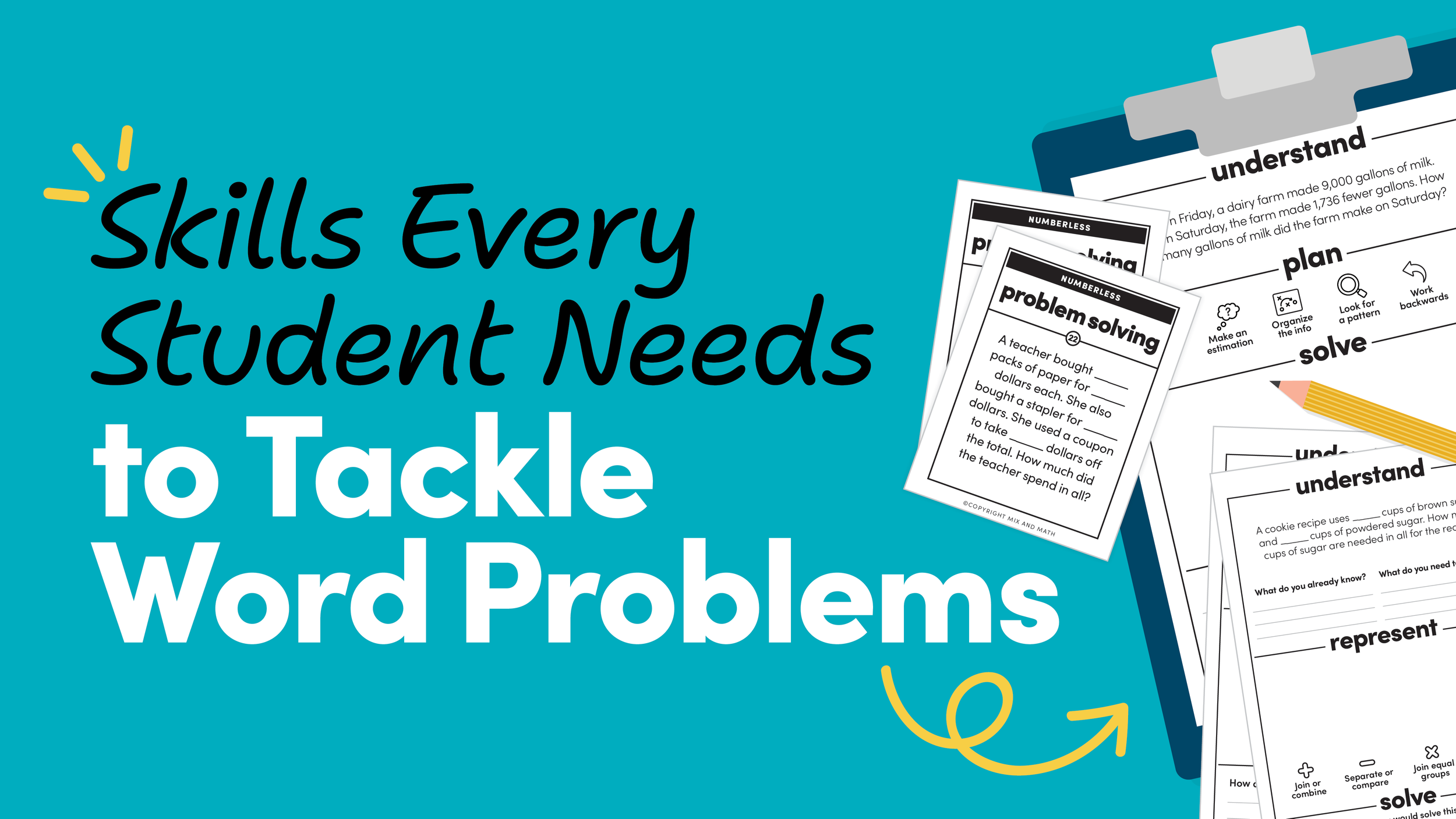
So what does that look like in action? Here are some teacher moves to try the next time you introduce a word problem…
Ask Questions to Drive Understanding
Teach students questions they can ask themselves as they work to understand a problem.
What actions are happening in the problem?
What do we already know about the problem?
What is the problem asking us to find out?
Pause and ask your students if they need help with any words or phrases in the problem. Our students come to us with a wide range of experiences, and the context of a word problem doesn’t always match what they know. A word problem about a farm may be confusing to a student who has only lived in a city. If a student doesn’t understand the context, it becomes much harder for them to understand the actions in the problem.
Make Thinking Visual
Teach students that creating a model of the problem (either physically or mentally) is a valuable part of sense-making.
Act out the problem with manipulatives. Sometimes students need to literally see the math in motion to understand what’s happening.
Draw a picture of the situation. This might start as stick figures, then progress to bar models. If it helps them make sense, encourage it!
Create a "mental movie" of the problem. Connect to their experience of visualizing while reading. It is a helpful strategy in math, too!
Estimate the Outcomes
Teach students that predicting the answer before solving can be a helpful tool in further understanding the problem. Consider asking students the following question…
Should the quantities in the problem increase or decrease?
What would be too small an estimate? What would be too big?
How does my estimate match what's happening in the problem?
These questions encourage students to think about what’s happening in the problem, and they will naturally begin to consider possible approaches for solving without doing any calculations just yet.
You might be surprised just how much growth your students make in problem-solving when you teach students strategies they can use to understand a problem, AND give them plenty of practice trying out those strategies.
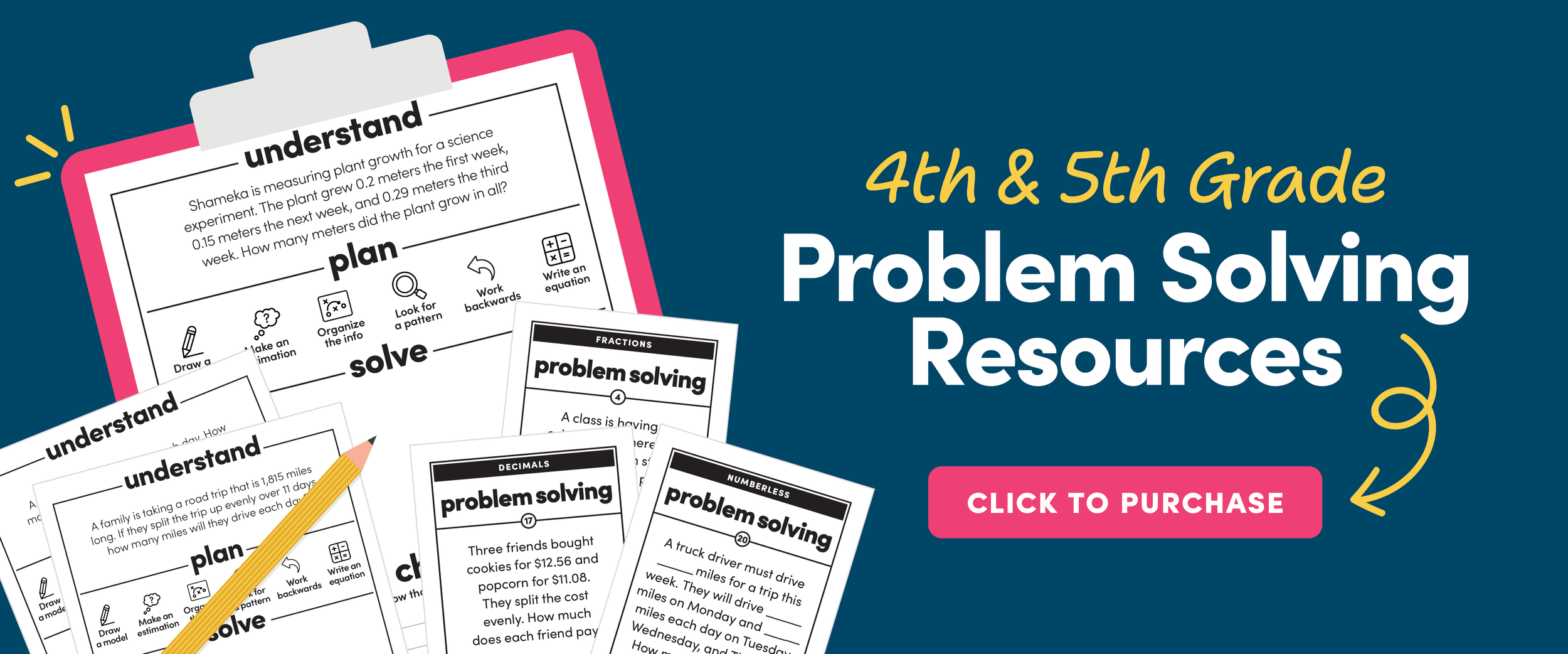
If you need a place to start, our problem-solving resources were designed to focus students’ attention on the problem-solving process and encourage them to slow down to make sense of problems. These resources guide students through modeling the situation, estimating before solving, and making sure their solutions are reasonable. It’s a valuable resource for both small group instruction and whole group discussions!
Making the Shift from Rushing to Reasoning
But what do we do when students aren't slowing down to actually use these strategies? Here's where the habit of how to approach a problem comes in...
When students solve word problems that all follow similar word patterns year after year, they develop the habit of plucking out the numbers, choosing the operation they worked on that day, and hoping for the best. Why not? Sometimes it works! And because of this, students don't really need to approach problems with the intention of making sense. They've often gotten by just fine without it!
Here are some ways to disrupt this habit and nudge students to slow down and think…
Vary the Question Types
Somewhere along the way, math turned into a class where the goal felt like “just find an answer”. I think so many of us have been working hard to adjust our students’ mindsets and bring the purpose of math back into focus. Math is about problem solving, making connections, noticing patterns, and thinking flexibly. But that meaning gets lost the moment a student pulls out two numbers and multiplies, simply because we’re in the middle of teaching a multiplication unit.
So how do we get back to the way we want students to experience and approach math?
One of the most powerful shifts we can make is changing the types of questions we ask. When our questions devalue the answer and emphasize the thinking behind it instead, we truly highlight what matters.
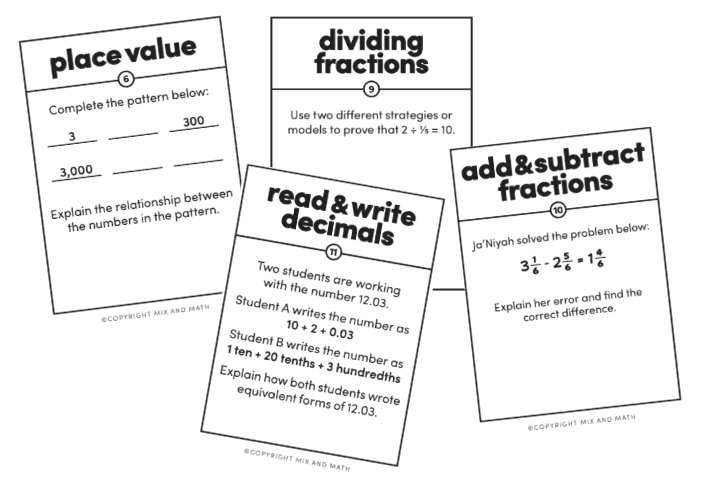
One way to do this is to switch our questions to more open-ended prompts. Rather than every question being about "how many they had altogether" (or some variation of this), imagine if our students were consistently asked to apply their understanding of math concepts by...
Identifying mistakes
Agreeing or disagreeing with thinking
Finding patterns
Comparing different strategies
When we vary the types of questions we ask students, they don't approach the problem thinking they already know what to do. The problem-solving habits we're working to disrupt no longer work because these aren't the same problems they're used to seeing. Instead, they begin to see that math isn’t about just racing to get an answer. It’s about thinking mathematically, which can look very different depending on the situation.
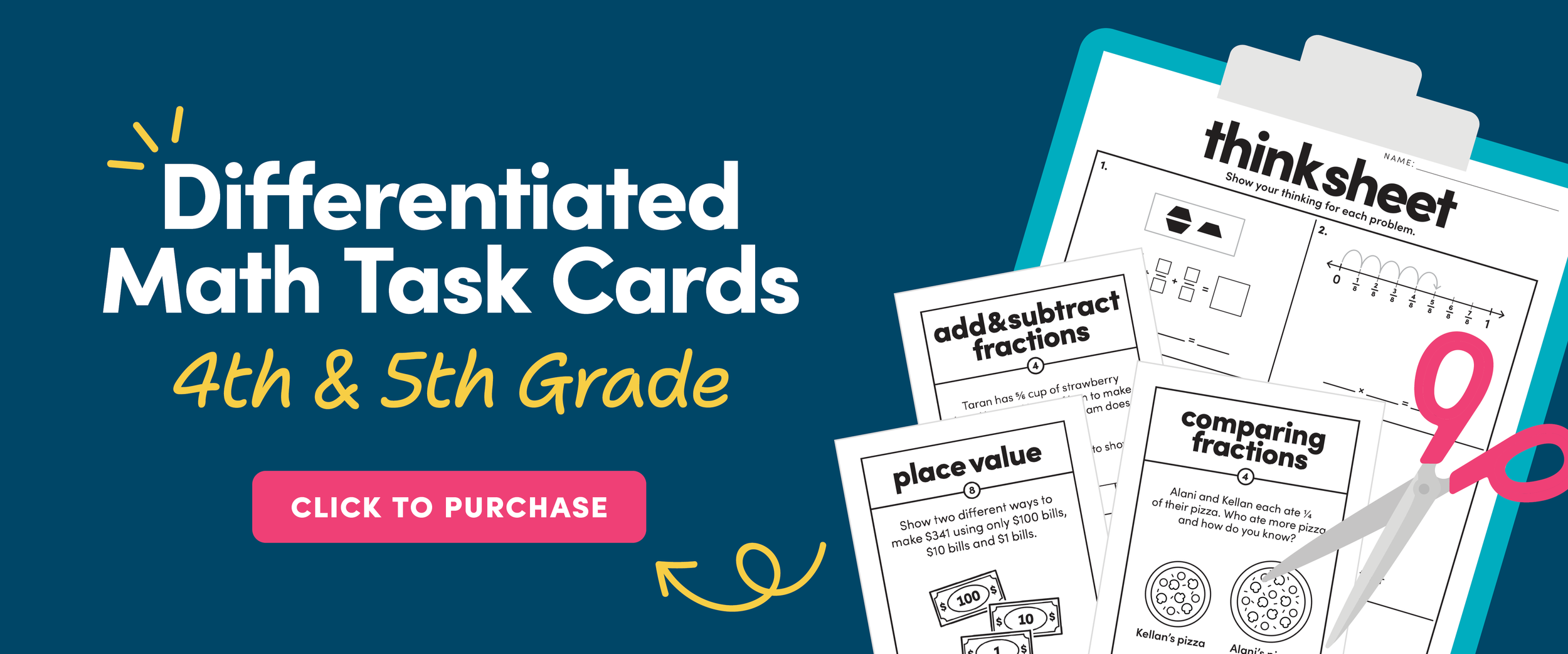
If you’re looking for a resource to help you create this variety of questioning in your classroom, check out our differentiated tasks! They give students practice analyzing strategies, using multiple representations, thinking creatively, and explaining their thinking. These task cards were created to hit all the different DOK levels so that you have what you need to meet all learners where they are.
Take the Numbers Out of the Equation
When we’re focusing on problem-solving, numbers can sometimes be the biggest distraction. If the goal is to help students slow down and develop a plan for solving, try taking the numbers out entirely.
Numberless word problems give students the opportunity to analyze what’s happening in the problem, without the pressure or temptation of solving. This is where we see students begin to make deeper connections between operations and the actions these operations represent.
Removing the numbers from a problem isn’t just an effective strategy in K-2 classrooms. It is just as powerful with students in 3rd-5th grade because it encourages students to take time to understand the problem and create a thoughtful plan for solving, even if it’s a multi-step problem!
To learn more about numberless word problems and how they can be used in your classroom, check out the blog post we wrote that walks you through using them in upper elementary classrooms!
Over time, these shifts have a big impact! When we help students prioritize understanding, they approach word problems with a new mindset. It isn’t about guessing the operation; it’s about making sense of the situation. Instead of rushing to an answer, they start to view problem-solving as a purposeful process they can navigate with confidence in the classroom and in life.